

Data Engine Thinking: a one-page review
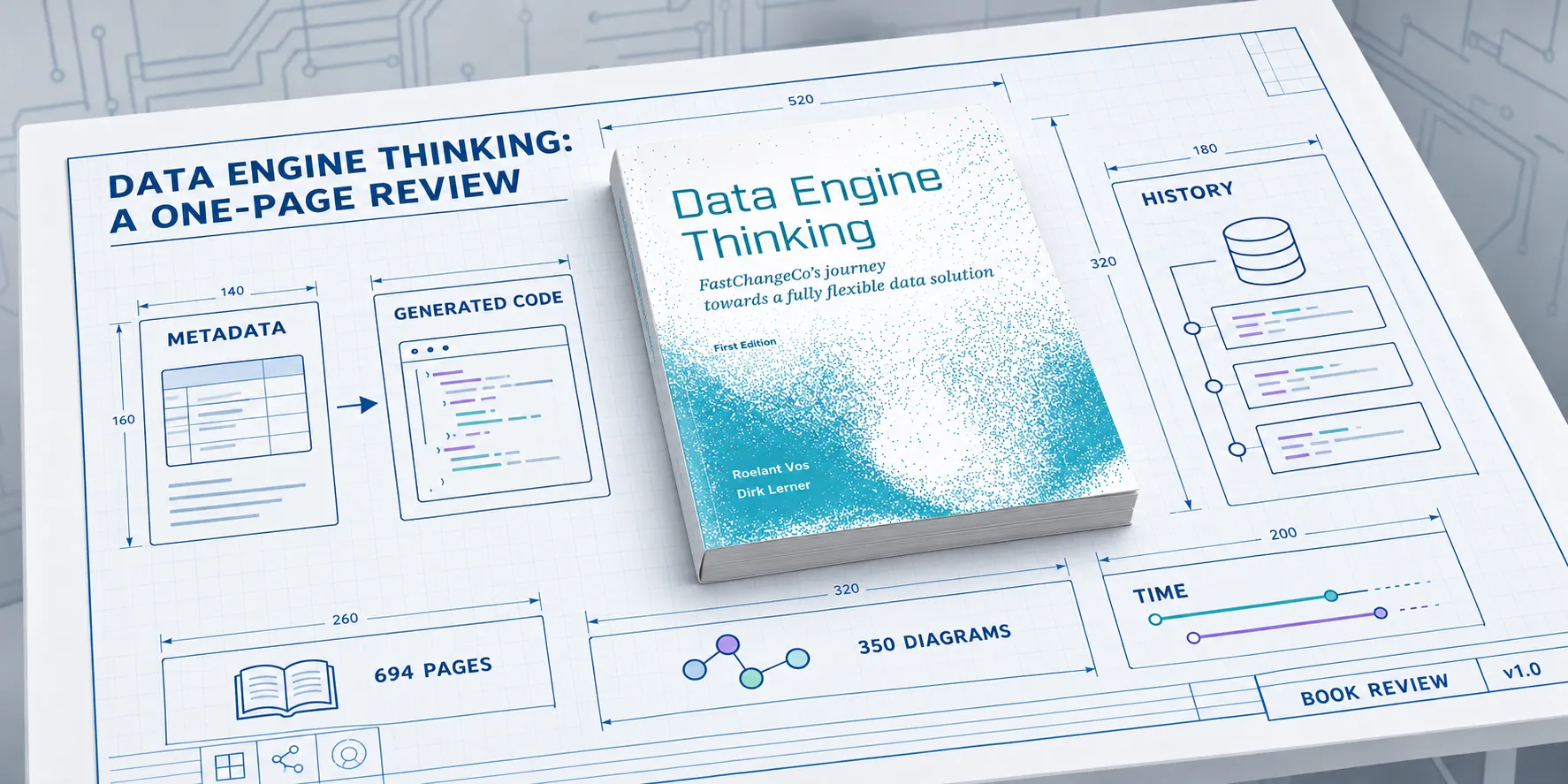
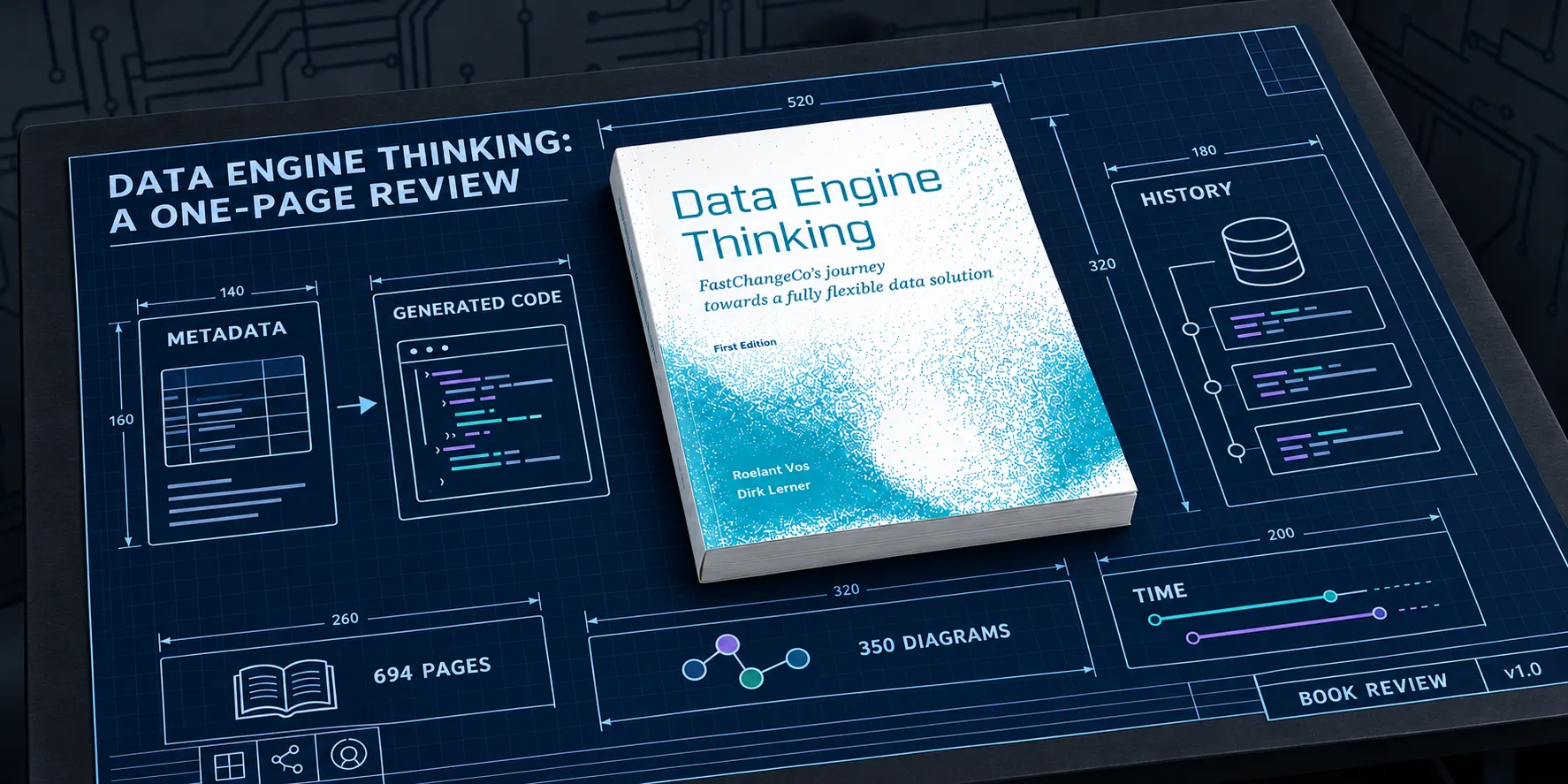
Data Engine Thinking is a 694-page book by Roelant Vos and Dirk Lerner about building a data solution that expects to be wrong and makes being wrong cheap. It came out in June 2025, self-published, with about 350 diagrams. The softcover is €125/AUD195. That price is a fair warning: this is a reference you work through, not something for the train.
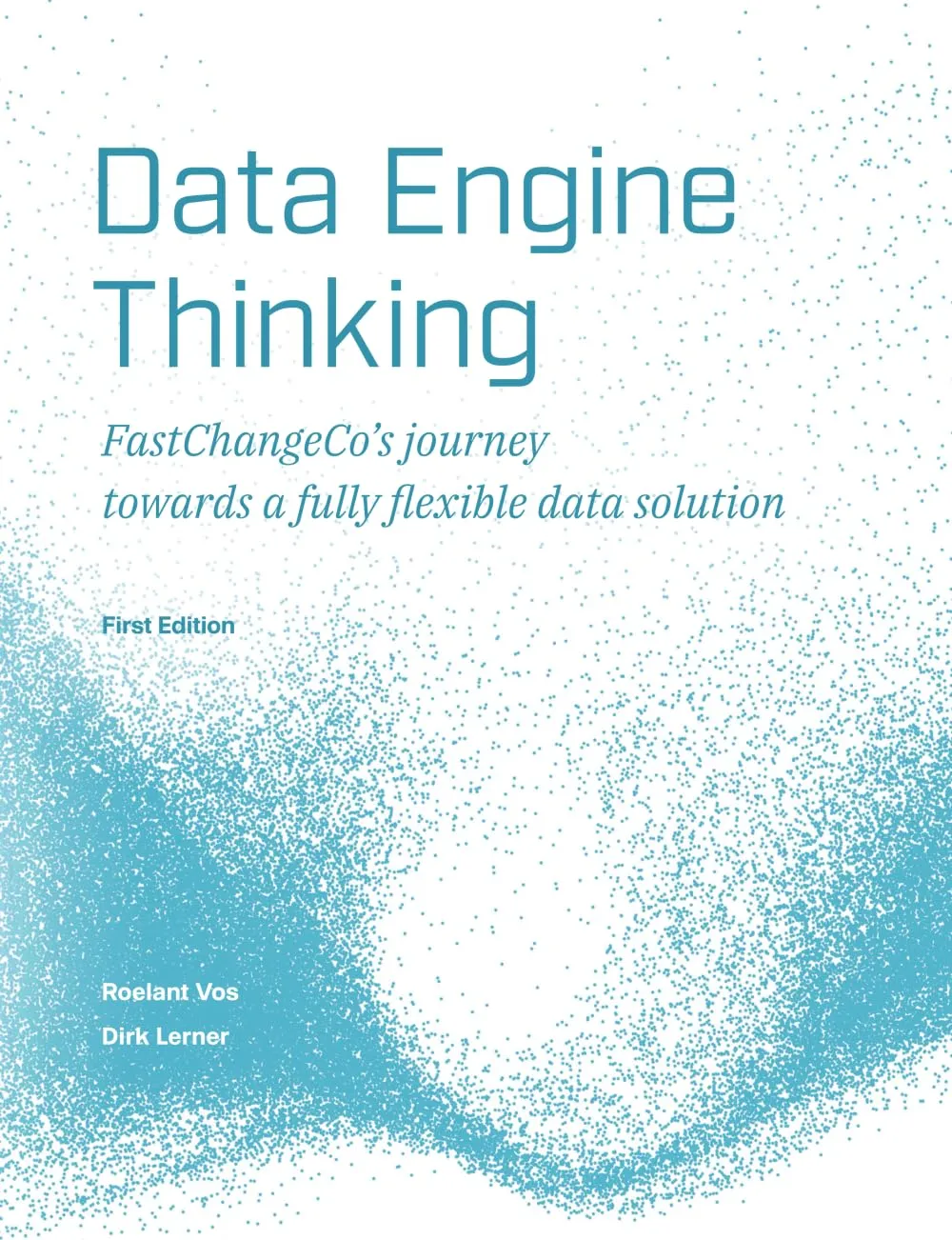
The authors
Dirk Lerner runs TEDAMOH, the Data Modeling Hub, in Germany. He has spent 25 years on data modelling, temporal data, and automation, was early to Data Vault and FCO-IM in Germany, and hosts the antifragile data podcast. Time in data is his thing, and it shows.
Roelant Vos works from the Netherlands, also with 25 years in data. His focus is model-driven design and development automation, driven by what he calls “inspired laziness”: if a task repeats, generate it.
That is 50 years of combined experience, and the book reads like it.
What the book is
Two tracks, alternating. Story chapters follow FastChangeCo, a made-up company with siloed systems, reports nobody trusts, and a new data team trying to fix it. Method chapters explain the thinking behind each step the team takes. The story chapters are short, the shortest is six pages, and they keep the method honest: every principle gets dropped into a messy organisation and has to survive contact with people.
The core idea is in the title. A data solution should be an engine. Design metadata goes in, generated code comes out, and a persistent staging area keeps every raw record so you can regenerate and reload whenever your understanding of the data changes. Your first interpretation of the data will be wrong. The architecture should make fixing it cheap.
The weight sits in the middle. The architecture chapter runs 100 pages. Getting the data in runs nearly 250, and covers staging, Hubs, Links, Satellites, orchestration, and testing in the detail most books skip: hash collisions, NULL handling, padding, time zones, restartability, and race conditions in the load window.
What stands out
Time. The section on Satellites and time is 116 pages on its own. Allen relationships, open or closed periods, bitemporal modelling, late-arriving transactions, and replaying history. Most data books wave at slowly changing dimensions and move on. This one treats time as the hard problem it is.
Choices, not dogma. The architecture chapter lays out eleven example architectures, from “the traditional” through “go for broke”, “the minimalist”, and “all-in virtual” to Lambda and Kappa, with the trade-offs of each. You get the reasoning, so you can pick the one that fits instead of copying the one the authors like best.
Automation as part of the design, not an afterthought. There is a schema for the metadata itself: data objects, items, mappings, and lineage. Then version control, branching, CI, and what to do with a failed deployment. It treats a data solution as software, which plenty of data teams still don’t.
What to know before you buy
The integration layer is Data Vault all the way. The principles transfer, but if your shop runs dbt and a medallion layout, expect to translate a fair bit of the middle of the book.
It is long and dense. You won’t get through it in an arvo, and you shouldn’t try. It works best read alongside a real project.
Buy it from Amazon over here:
Get Data Engine Thinking
(Affiliate link)
A book, not a prompt
The online bookshops are full of generated books. In September 2023 Amazon capped self-publishing at three new titles a day per account because of the flood. You know the type: 150 pages, out a week after the topic trends, confident on every page and specific on none of them.
A language model can write a passable section on hash keys. It can’t tell you which hashing, NULL handling, or padding choice will bite you in production, and why. That comes from years of doing the work, and most of it was never written down anywhere for a model to scrape. This book is where it got written down.
The irony is that the whole book argues for automation. Generate the repeatable parts from metadata so people can spend their time on judgement. That is the right way round. Generated books do the opposite: they automate the judgement and leave nothing worth reading.
Even on price it holds up. €125 for 694 pages is about 18 cents a page. A €9.99 generated paperback of 150 pages is about 7 cents a page, and you are paying for nothing.
Who should read it
Data architects, data modellers, and engineers who build data platforms and want them to survive the next change in the business. If you want a quick intro to data engineering, this isn’t it. If you have been burnt by a warehouse that couldn’t take a new source without a rebuild, I reckon this is the book.
Get Data Engine Thinking