The keyboard conundrum
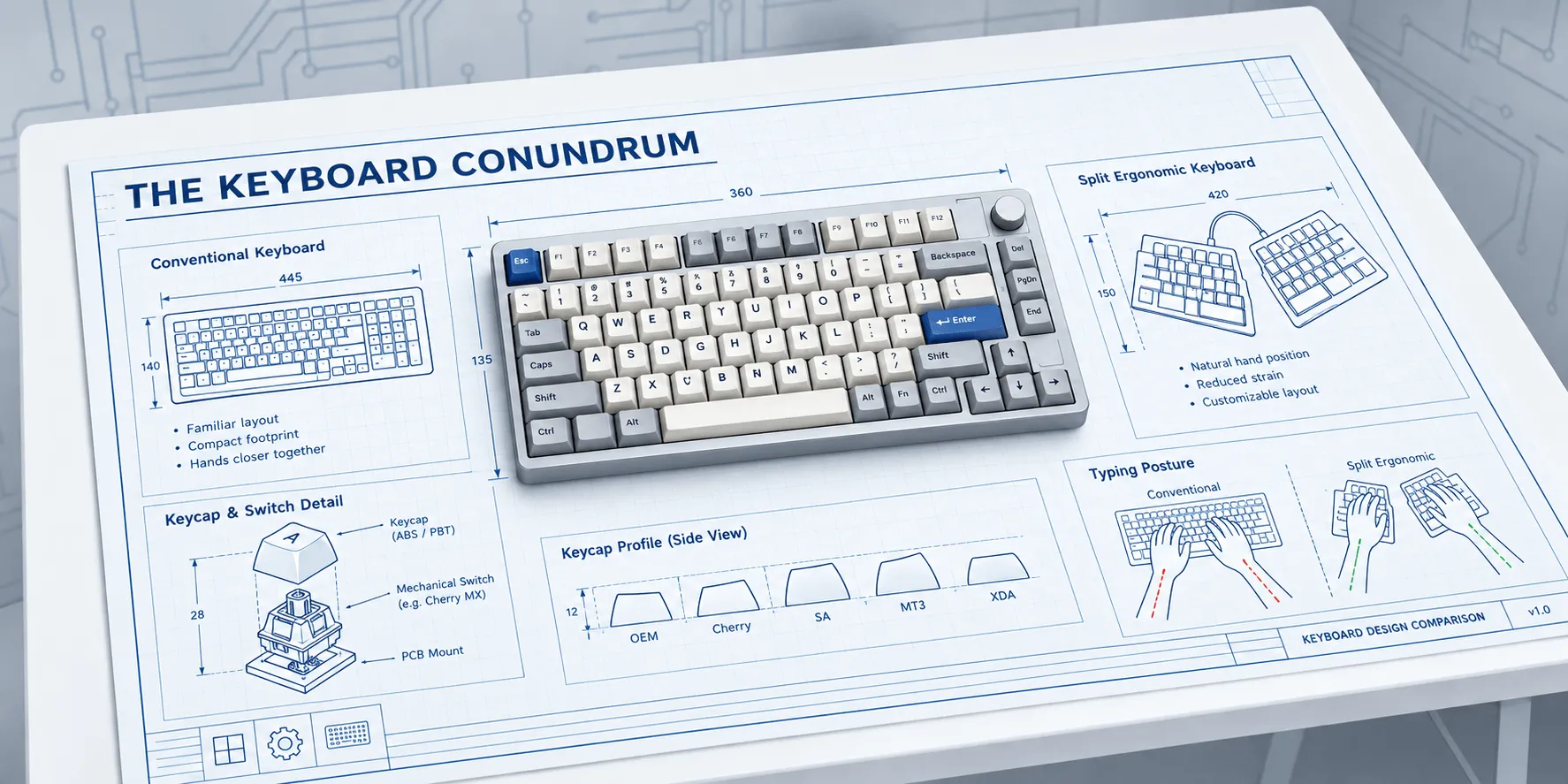
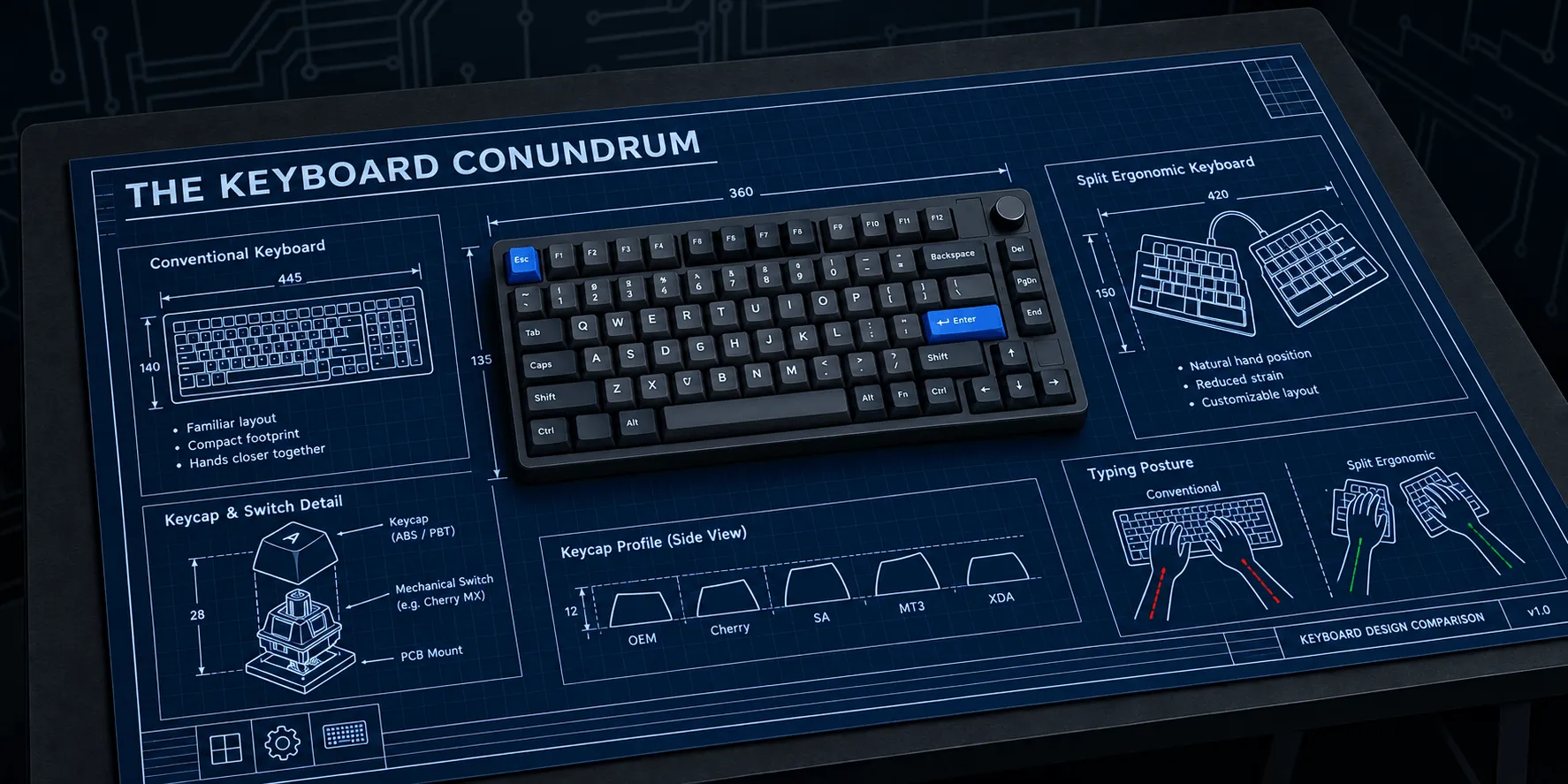
I have been fighting keyboards for the better part of my life. The fight is always the same: find one that keeps hands and wrists happy while still letting me produce something useful.
My ergonomic Logitech gave up the other week, the latest of several in a row. Shopping for a replacement turned into a trip down memory lane, and that is this post. The shopping itself is in part two.
When the keyboard was the computer
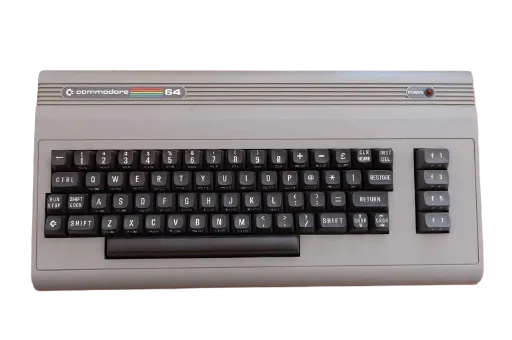
My first keyboards were not peripherals, they were the computer. On a Commodore 64 the keyboard was the case. There was no separating “the computer” from “the thing my fingers touched”. They were cast as one object, mushy keys and all.
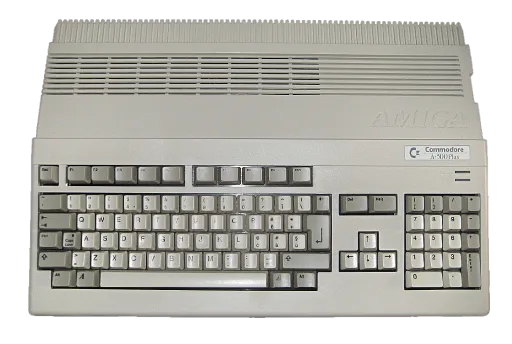
The Amiga 500 kept that arrangement: a keyboard-shaped computer you plugged a monitor and a floppy drive into. It was a lovely piece of industrial design, and it meant nobody thought about keyboards as a category of their own. You did not choose a keyboard any more than you chose the shape of a car’s steering column. It came with the machine, and that was that.
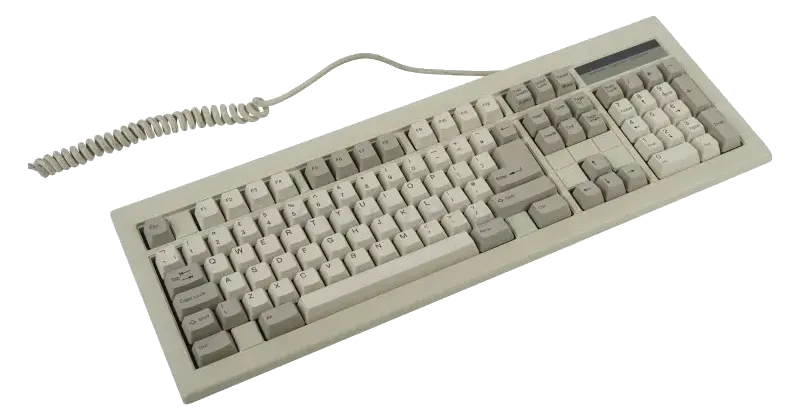
The shift came when the PC became the default, dragging along a detachable keyboard as a separate, replaceable thing. Suddenly there was a market. Suddenly there were opinions. For a long time the default opinion was that bigger is better. Full-size, 108 keys, a numpad you may never touch but would sorely miss if it were gone. I spent decades on exactly that shape without giving it much thought. It was just what a “real” keyboard looked like.
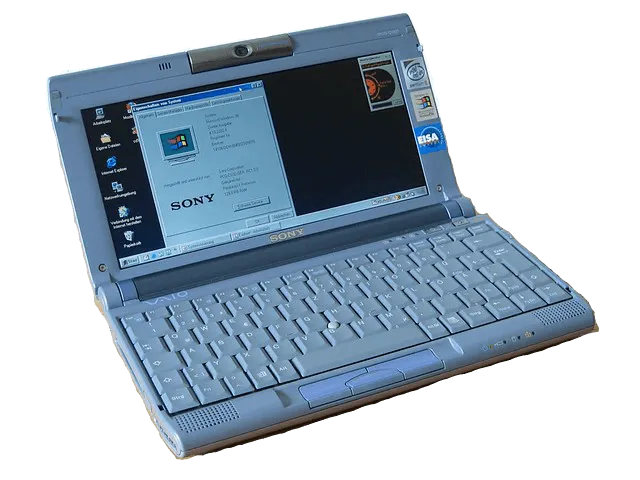
Laptops muddied that. Every manufacturer had its own layout and key feel. The odd one out was a half-sized Sony Vaio I used for a while in the 90s. It showed that a laptop did not have to be enormous, and a keyboard could be small, neat, and tidy without being useless.
Discovering that hands are not rectangular
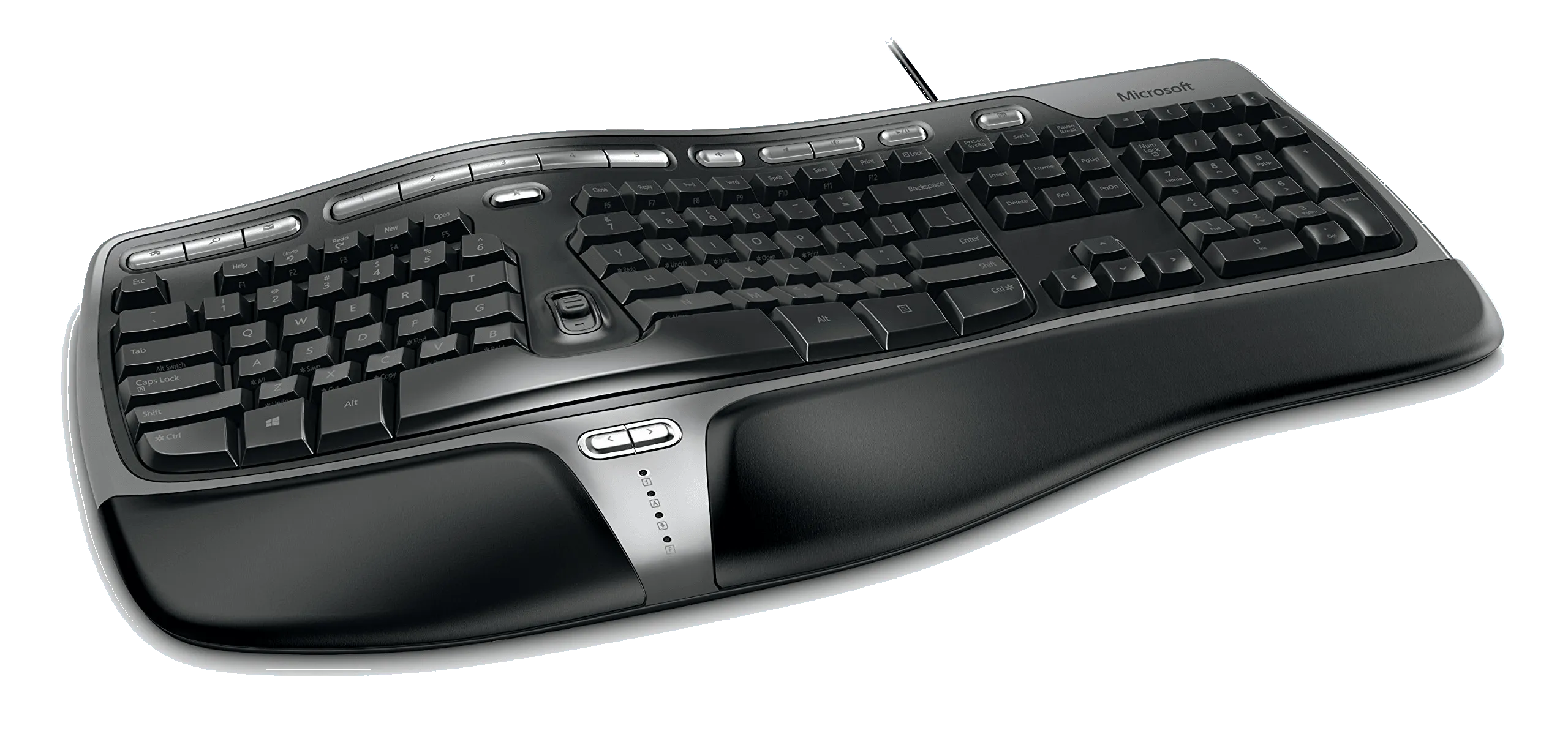
At some point, between RSI-adjacent aches, long days, and a growing awareness that my wrists did not enjoy being twisted inward for eight hours, I discovered ergonomic keyboards. The Microsoft Natural line was my gateway: a gently split, gently domed layout that let the wrists sit straight instead of angling in toward each other. It was bulky and dominated any desk it sat on, but it fixed the physio problems.
A split keyboard also forces you to type with the correct hand on the correct letter. It looks strange at first. It is a benefit.
What strikes me looking back is how mainstream this once was. Microsoft alone shipped several generations of Natural keyboards, sold in ordinary electronics shops, sitting next to the boring rectangular ones. Ergonomic did not mean niche or expensive. It meant “the other normal option”. If your wrists complained, you picked one up at the same shop you bought your printer paper.
Fewer choices, not more
That is no longer true. Every other category of computer hardware has spent the last twenty years getting more varied: more panel sizes, more form factors, more price points. Keyboards went the other way. Microsoft quietly wound down its peripherals business. The mainstream ergonomic options that used to sit on a shelf have simply stopped existing, replaced by a smaller and more specialised crowd of split mechanical boards and kit-built column-staggered boards from boutique makers.
There is nothing wrong with that scene. It is inventive, and some of the best ergonomics work today comes out of it. But it comes at a cost. Buying one now means reading forum threads and firmware documentation instead of picking a box off a shelf. What is left splits into “plain, cheap, and everywhere” on one side and “boutique, expensive, and DIY-adjacent” on the other, with not much in between. The “just works” ergonomic keyboard has become a specialist purchase again. I reckon that is a strange kind of regression for a category that exists to solve a common, unglamorous problem: sore wrists.
This is not nostalgia. It is the point where the market stopped offering a normal ergonomic keyboard, and the sensible option became the specialist one.
The tool you touch thousands of times an hour deserves more consideration than “whatever came in the box”. Acting on that consideration has got harder, not easier. Part two is what happened when I had a crack at it anyway.