An HSC major work example
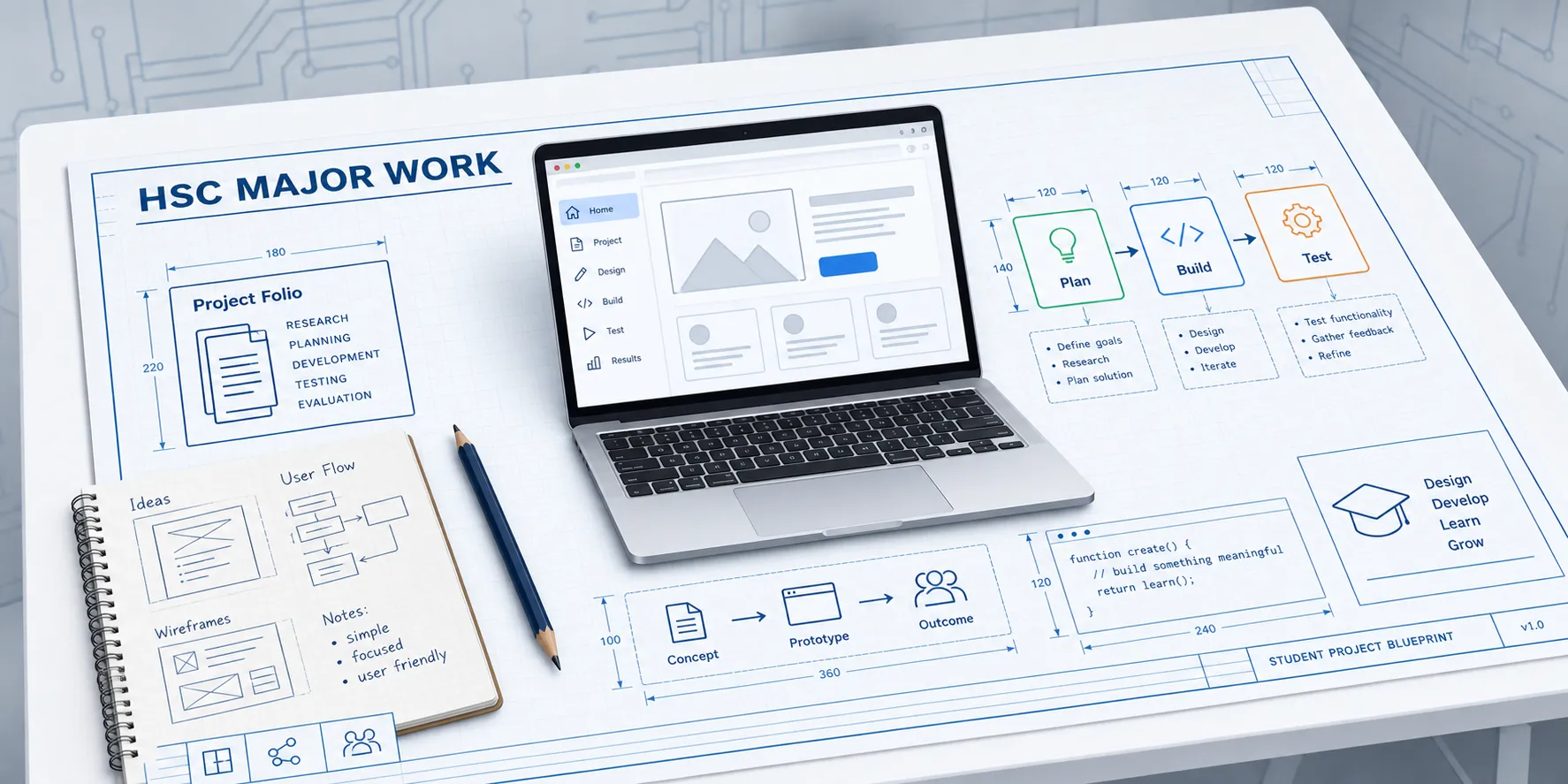
I’ve watched a few Year 12 cohorts work through their HSC (NSW Higher School Certificate) major works. The feedback comes late. Often a student sees how a marker reads the folio once, after it is handed in.
I work with AI solution design every day, so I had a crack at an obvious question: can a folio be built like software, so the student gets marker-style feedback every time a page changes?
The answer so far is hsc-major-work-example, a fictional Textiles and Design major work built as a design system.
Everything in the repository is invented: the student, the school, the student number, the garment, the sources, the experiments, and the results. The plates were generated by AI. Nobody has submitted any of it, and nobody should.
The example folio
“The Raven’s Ledger” documents a school dance dress in the spirit of the one Wednesday Addams wears to the Rave’N dance in the Netflix series Wednesday. It is twelve A3 pages in NESA’s four sections, with the Addams look carried through: 1900s to 1950s styling, and selected plates in black and white like the 1960s television series.
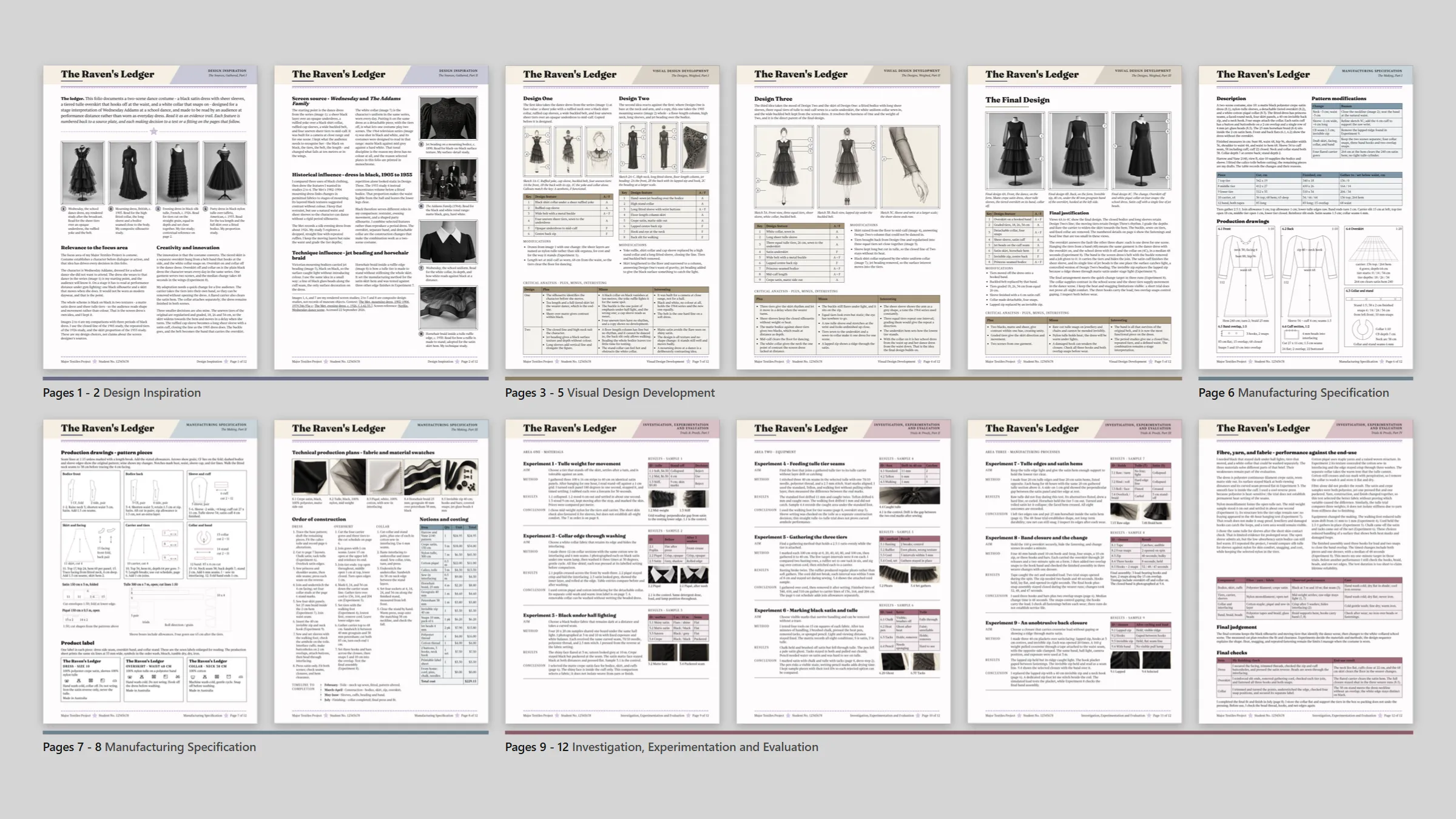
Click a page to open it full size.
The dress is only the test case. The whole point is the design system around it.
What is in the repository
- The folio deck and four production items (binder spine, swing tag, product labels, and mount scaffold) as HTML design components with shared stylesheets. Type sizes, colours, and page limits are checked, not eyeballed.
- A preview script that opens the deck in a browser. Print at 100 per cent and you get a true-size A3 proof.
- The NESA Assessor agent, an agent that marks the exported PDF against the published marking guidelines and points at the evidence that holds each mark back.
- The Canva Sync agent, which carries the coded deck into Canva for students who would rather finish there.
- Guardrails that stop the agents writing where they shouldn’t. The assessor can write its review and nothing else.
Each agent is defined once in .agents/, with thin wrappers for Claude Code, GitHub Copilot, and Codex.
The rule it is built on
The student makes the work. The AI marks it. An agent never writes folio prose, draws a plate, or invents a result. It reads, measures, quotes the criteria, and says what a marker would find.
Trying it
pwsh scripts/preview.ps1 -Item folio
python -m pip install -r requirements.txt
python .agents/skills/canva-sync/scripts/canva_sync.py doctor
The first line opens the deck in a browser. The other two install the Python packages and check the rest of the setup.
The rest of the series
- Responsible AI and the HSC - what NESA allows, and where the line between marker and ghostwriter sits.
- How the NESA Assessor works - what the assessor measures, how it places each mark, and what four different agents made of the same folio.
- From code to Canva - start the folio in code, then carry it into Canva and keep designing.
Code, stylesheets, and scripts are MIT licensed. The folio prose and generated plates are CC BY 4.0.